
Wonder · With AiSee · Proof of concept
Indoor navigation for smart glasses.
Put on AiSee glasses and ask for a place. Wonder sees where you are through the glasses’ camera and guides you there by voice and vibration. Made for blind and low-vision visitors; it runs on an iPhone too.
0
beacons, wiring or floor markings. The space is recognised from what the camera sees
1
walk by a sighted staff member maps a space. Anyone can then be guided through it
4
ways to know where you are, from the phone’s camera, the glasses’ camera, or both
1 Oct
2026: on site in the Flower Dome, the phone guided a visitor turn by turn to the first three stops
From the project repository and its 1 October field report.
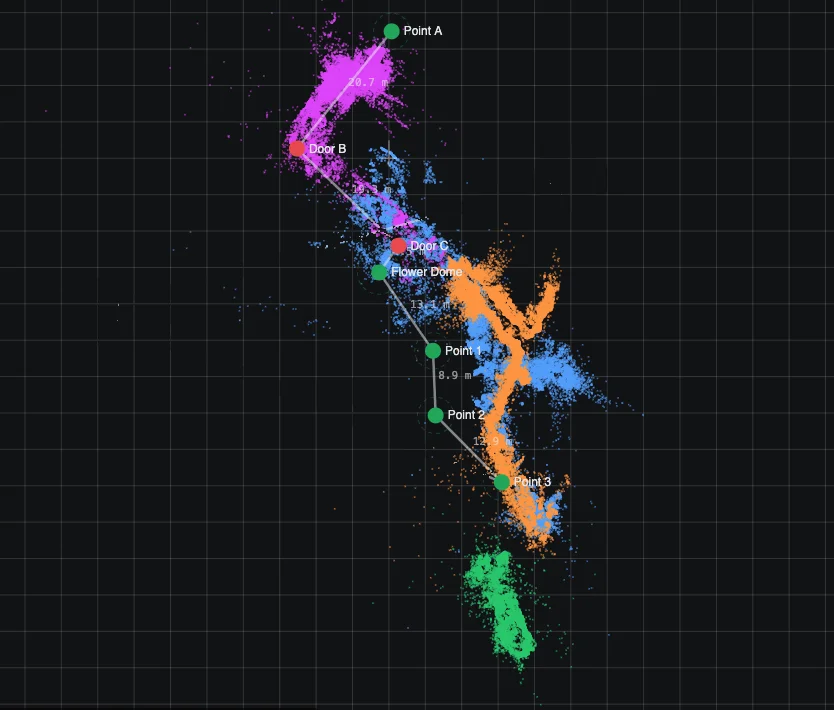
Under glass, GPS gives up
A botanical greenhouse is one of the harder places to navigate without sight. The layout is organic, there are few straight walls to follow, and the things worth finding, an orchid display or a titan arum in bloom, are exactly what a white cane will not find for you.
Wonder recognises the space from the camera, plans a route and talks the visitor along it. The screen is never needed.
Scan once, then anyone can walk it
Three parts, one loop. When the space changes, staff walk it again.
Author
A sighted staff member walks the space with an iPhone, marking places as they go: destinations, junctions, exhibits and hazards. The path they walk becomes the map.
Edit
In the web editor, nudge places into position, write what is spoken at each one, and line up several scans of a large space into one map.
Navigate
A visitor asks for a place and is guided there by voice and haptics, with each exhibit and hazard announced on the way past.
What a visitor can say
Press the Action Button, ask Siri, tap the screen anywhere, or tap the glasses. Places are matched loosely, so “the orchids” finds the Orchid Display.
| “Take me to…” | Guidance starts, and waits for tracking if it needs to |
|---|---|
| “Where am I?” | The nearest place, how far, and on which side |
| “What’s nearby?” | Up to three places within 10 metres, left, right or ahead |
| “Repeat” | The current instruction again |
| “Beeps on” | A steady tick while on course, and a pattern panned left or right to turn |
| “Stop” | Guidance ends |
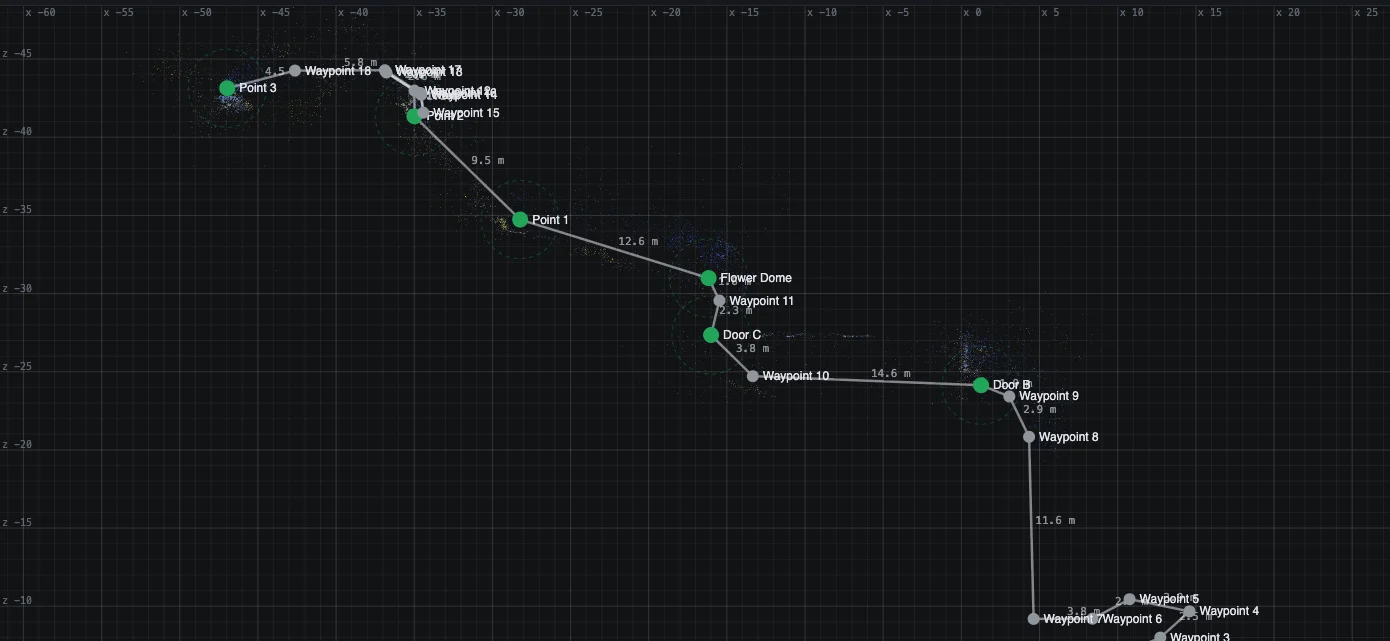
The phone can stay in a pocket
With AiSee glasses, the glasses’ camera does the looking and a step counter carries the visitor between fixes. Speech plays through the glasses, and turns are heard at once.
Hazards are announced with a warning buzz as you pass, and exhibits with their description, so a walk becomes a tour.
What it runs on
From the README, as of October 2026.
| iPhone | A12 or newer on iOS 17; a Pro model with LiDAR recognises the space fastest. On TestFlight |
|---|---|
| Glasses | AiSee glasses, connected from the app |
| Android | A glasses-only visitor app, as a pre-release |
| Positioning | ARKit world tracking and Immersal visual positioning |
| Routing | A* over a map of places and the paths between them |
| Map editor | On the web. Every save is a new version you can roll back to |
Part of AiSee
AiSee is the AI tour guide for museums, cultural venues, parks and gardens, on a phone or a hands-free wearable shaped with blind and low-vision visitors. Wonder is the indoor navigation for smart glasses FlowsXR builds with them.