
The 2026 Smartglasses Landscape
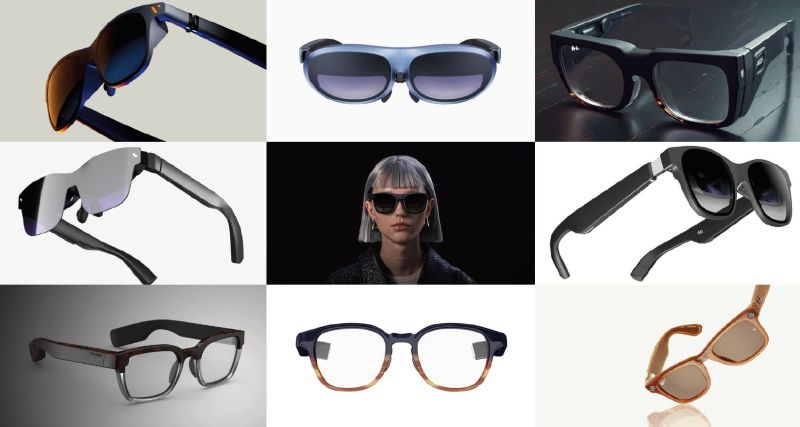
Smartglasses have quietly become one of the most exciting product categories in tech. What started as clunky prototypes and niche dev kits has evolved into a market with over 53 commercially available devices across four distinct categories — and the momentum is accelerating.
We put together a comprehensive database tracking every smartglasses device and SDK currently on the market. You can explore the full interactive guide here:
→ Explore the Smartglasses Guide
Four Categories, One Trend
The smartglasses market has stratified into clear tiers:
1. Audio-First Smartglasses (No Display)
The largest category by device count. Ray-Ban Meta proved the form factor works. Now Rokid, Xiaomi, HTC, and others are racing to ship lightweight AI-powered frames under 50g. Most pair a 12MP camera with on-device AI assistants — think real-time translation, visual Q&A, and hands-free capture.
2. HUD Smartglasses (With Display)
This is where the market gets interesting. Micro-LED waveguide displays have matured enough for everyday wear. Devices like the Even Realities G2, Meta Ray-Ban Display, and Rokid Glasses pack green or full-color HUDs into frames weighing 30–70g. Navigation, live captions, and teleprompter use cases are driving adoption.
3. 3-DoF Tethered Displays
The "portable cinema" segment. USB-C powered Micro-OLED glasses from XREAL, RayNeo, VITURE, and others offer 1080p+ displays with 40–57° FoV. These are display accessories, not standalone devices — but the visual experience is impressive for media consumption and productivity.
4. 6-DoF Spatial AR
The bleeding edge. Google's Android XR prototypes, Snap Spectacles, Meta Orion, and XREAL's latest spatial devices are pushing toward true AR computing. Full hand tracking, spatial anchoring, and immersive overlays — though battery life and weight remain challenges.
The SDK Landscape
For developers, the story is just as dynamic. We tracked 15 SDKs spanning the full spectrum:
- HUD SDKs like ActiveLook, Even Hub, MentraOS, and Meta's Wearables Toolkit (Preview) let you build companion-app experiences for lightweight glasses
- Spatial SDKs like Android XR, Snap Lens Studio, XREAL SDK 3.x, and Rokid UXR enable full 3D AR development with Unity and native Android
Most HUD SDKs follow a phone-hosted BLE architecture, while 6-DoF platforms run on-device with Unity or Jetpack Compose. The developer experience varies widely — from open-source GitHub repos to gated enterprise programs.
→ Browse all SDKs with documentation links
Key Takeaways
- AI is everywhere. Over 70% of smartglasses now ship with some form of AI — translation, visual Q&A, or multimodal assistants powered by GPT, Gemini, or proprietary models.
- China leads in volume. Chinese manufacturers (Rokid, INMO, RayNeo, XREAL, Xiaomi, Meizu) produce the most models and iterate fastest.
- Micro-LED is the display king for lightweight HUD glasses, while Micro-OLED dominates tethered displays.
- Waveguide optics have won the HUD form factor battle over birdbath for sub-50g frames.
- The price sweet spot is $300–$600 for consumer devices, with enterprise and 6-DoF models ranging higher.
What This Means for FlowsXR
As a studio building AR/VR/MR experiences, we're watching this space closely. The convergence of lightweight form factors, developer-friendly SDKs, and mainstream AI is creating new opportunities for:
- Enterprise training delivered through HUD glasses instead of headsets
- Spatial storytelling on 6-DoF AR platforms
- Accessible experiences using audio-first and caption-enabled glasses
The hardware is finally catching up to the vision. The next challenge is building experiences that make these devices indispensable.